Centrul Național
al Dansului
București
Omnia Hall

Brief history
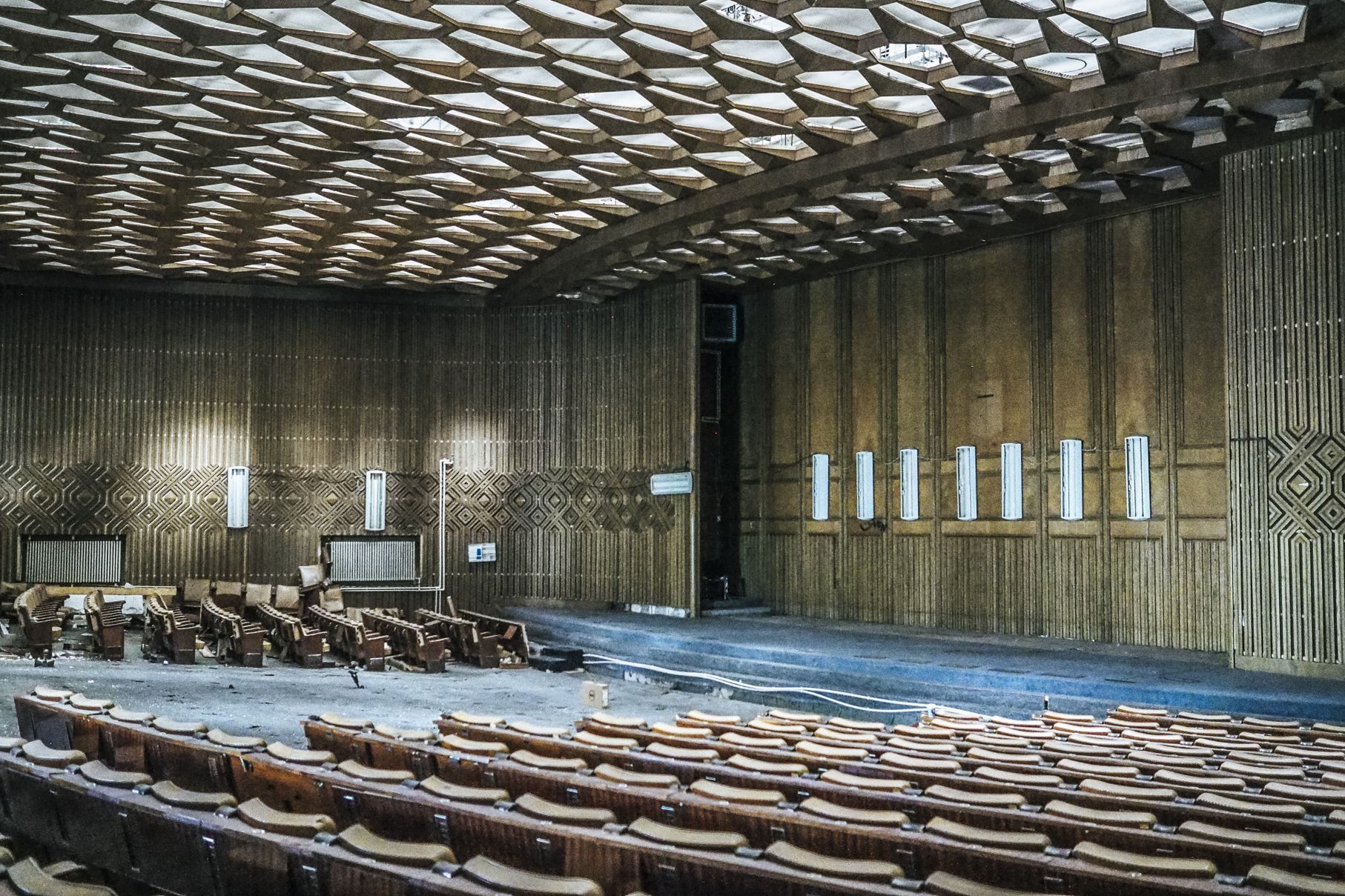
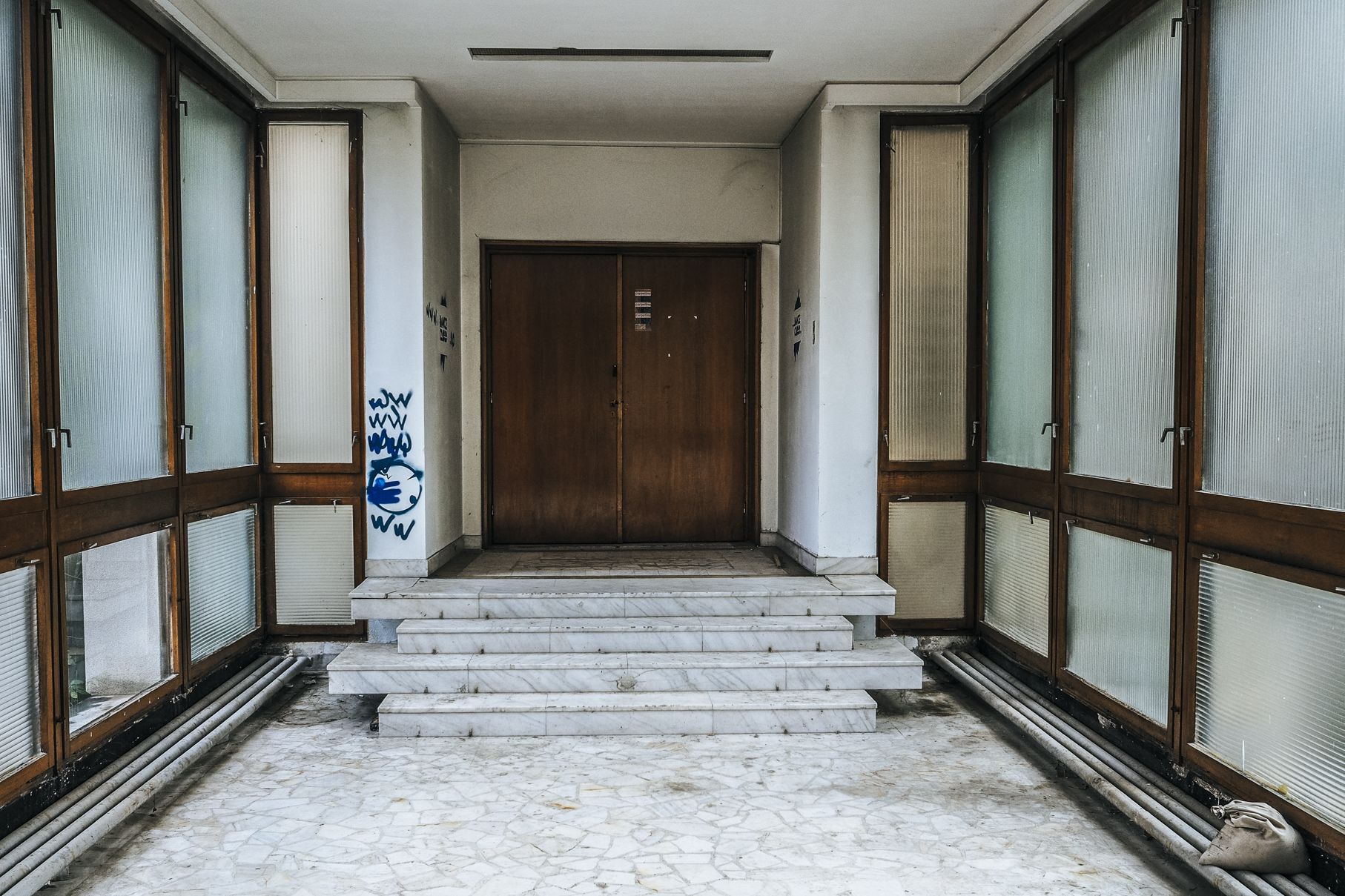
Located at 3 Cristian Popișteanu Street in Bucharest, Sala Omnia is a building designed in 1967 by architect Cezar Lăzărescu as an annex to the headquarters of the Central Committee of the Romanian Communist Party, intended for party conferences.
After 1989, the space underwent several institutional conversions: it housed the Romanian Senate and later the Ion Dacian National Operetta Theater. In the 2000s, the building entered a new chapter—that of the promise to become the first major public infrastructure dedicated to contemporary dance in Romania.
The Omnia Hall was to become the future House of Dance, but…
2016 | Transfer, financial commitment, and vision
- By Government Decision No. 651/2016, Sala Omnia was transferred to the administration of the National Dance Center Bucharest (CNDB).
- Funding was provided through a framework loan agreement between Romania and the Council of Europe Development Bank, with approximately €13.7 million allocated for the execution of the works. The CNDB became the beneficiary of the funding, but the administration of the funds was the responsibility of the Project Management Unit within the Ministry of Culture.
- The building was to be remodeled as a national center for choreographic production and presentation, including:
– two performance halls
– rehearsal studios
– media library and archive
– spaces dedicated to independent artists
– infrastructure for international cooperation
The Omnia Hall became, symbolically and concretely, the future home of contemporary dance.
2024 | The project, ready for execution
- A Government Decision is adopted to reapprove the technical and economic indicators for the investment “Remodeling, consolidation, and addition of floors to the Omnia Hall for conversion into the National Dance Center in Bucharest.”
- The design process is complete.
All approvals from the institutions involved have been obtained.
The next logical step was to launch the tender for the selection of the contractor.
2025 | Gridlock and destination change
- The National Centre for Dance in Bucharest requests information on the status of the building’s renovation and refurbishment.
- In June 2025, the Omnia Hall is removed from the list of funded projects following a government decision without detailed public justification regarding the legal grounds and impact on the cultural sector. The building is transferred to the administration of the Ministry of Internal Affairs, “with a view to carrying out specific activities,” as a result of “internal analyses regarding the opportunity to change its purpose.”
For CNDB and the choreographic community, the loss comes after eight years of planning, approval, and expenses estimated at approximately €1 million.
The decision highlights the lack of infrastructure dedicated to contemporary dance and the vulnerability of long-term cultural investments.
2026 | Community response and call for public policy
- On January 29, 2026, the National Center for Dance in Bucharest is organizing a public meeting with the Minister of Culture, Demeter András István, and the director of the Project Management Unit of the Ministry of Culture, Bogdan Trâmbaciu, in a critical institutional context marked by the loss of its headquarters. The meeting is the result of an extensive consultation process carried out by the CNDB and Linotip – Independent Choreographic Center, in which artists from several regions of the country participated.
- On March 2, over 300 artists sign a Memorandum submitted to the Ministry of Culture, requesting:
– the designation of a permanent headquarters for the CNDB,
– the development of a national network of choreographic centers,
– the reform of funding mechanisms (including operational support and European co-financing),
– the simplification of administrative procedures
– legislative changes for the recognition and regulation of dance companies.
Beyond the Omnia building, the main issue is actually about the Romanian state’s ability to consistently and predictably support an artistic field that, over the last two decades, has developed significantly at the national level and gained international recognition.
The loss of the Omnia Hall triggered a wave of reactions in the press and in the public sphere, bringing to the fore the situation of the National Centre for Dance in Bucharest and the demands of the dance community.
Below are some of the media appearances following this situation and the steps taken to ensure a stable operating environment:
Scena 9 – Dansează, dacă ai unde
Cațavencii – Misterul Sălii Omnia
Agerpres – Artiștii solicită Ministerului Culturii adoptarea unor politici publice dedicate susținerii dansului contemporan
România Literară – Despre viitorul Dansului Contemporan Românesc
TVR Cultural/ Jurnalul Cultural – Artiștii cer infrastructură, finanțare și politici publice reale
RFI – Interviu cu Simona Deaconescu și Arcadie Rusu despre situația dansului contemporan
TVR Cultural/ Jurnalul Cultural – Despre întâlnirea din data de 29 ianuarie 2025 la CNDB
G4Media.ro – Există un plan pentru găsirea unui spaţiu în care să poată funcţiona Centrul Naţional al Dansului Bucureşti