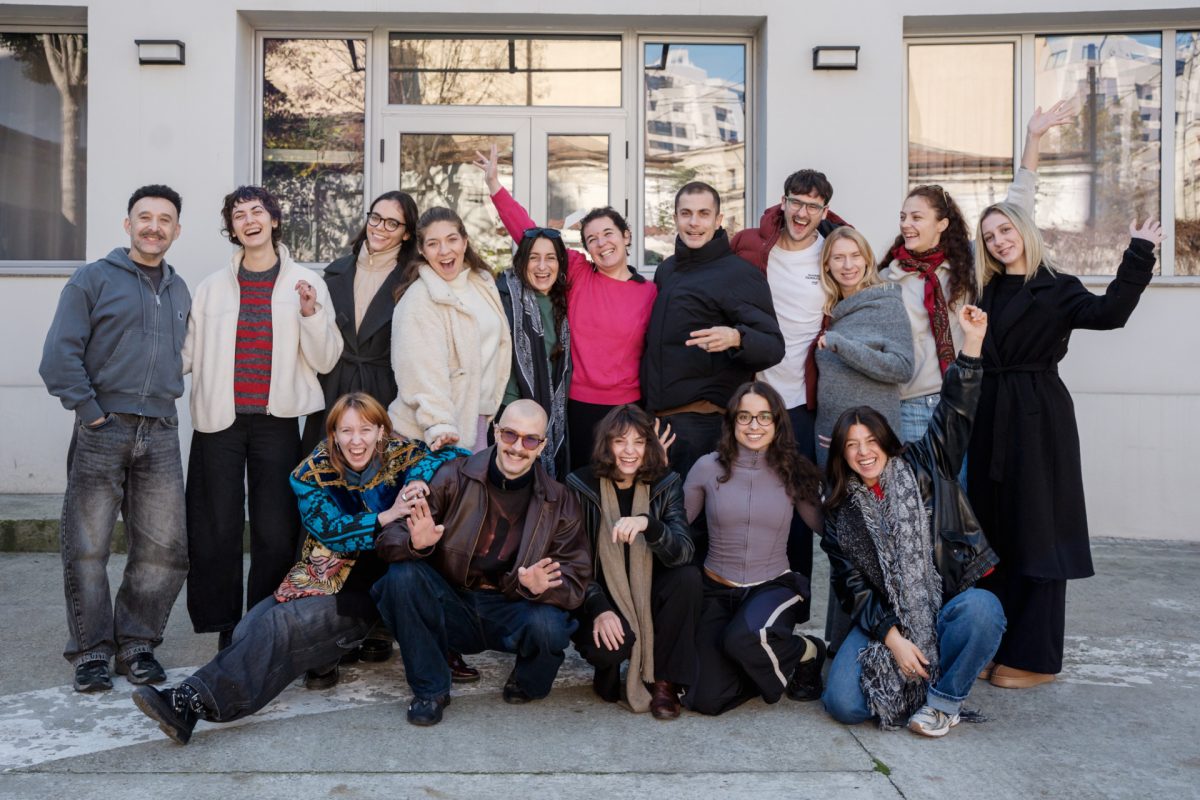
Three days, eight artists, countless perspectives and conversations that continue beyond the festival.
Between 6 and 8 November, IRIDESCENT also became a meeting point for eight international artists invited to Bucharest by the National Centre for Dance Bucharest (CNDB) as part of the Visiting Artist Programme.
Through our partner organisations and festivals – CataLANDance, The Work Room (Glasgow), Lithuanian Dance Centre, Albania Dance Meeting Festival, IRA – International Institute for Performing Art, Dance Fest Skopje and Dance Week Festival – we brought together artists from different contexts and geographies, eager to discover, share and bring artistic practices into dialogue.
With 23 partners in 22 European countries, the Visiting Artist Programme is a collaborative project that encourages artistic development, the exchange of experiences and professional practices. More than an invitation to attend a festival, the programme creates opportunities to meet local artists, discover new perspectives, attend performances and develop potential collaborations across borders.
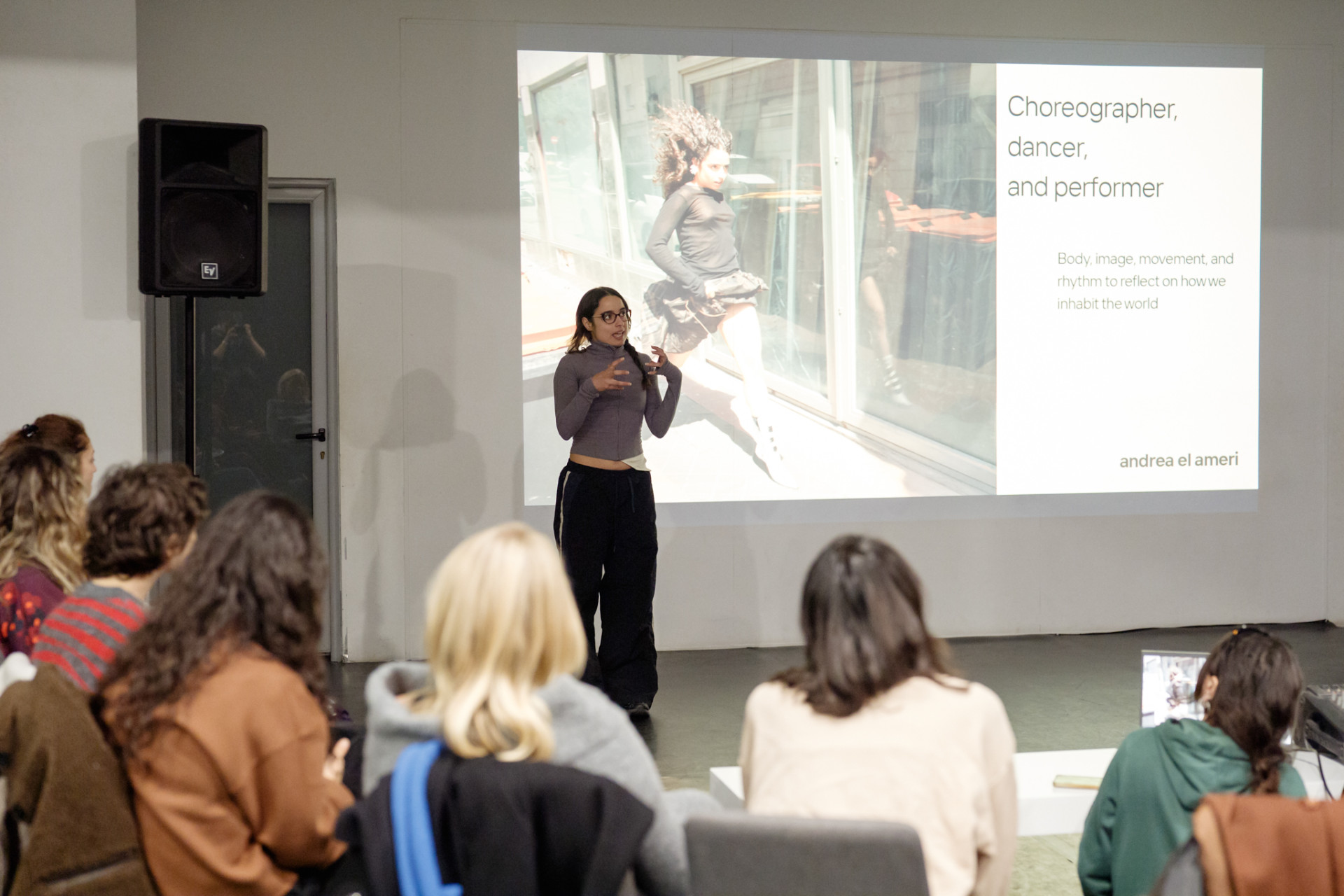
Andrea El Ameri, Mark Bleakley, Katherina Radeva, Eglė Ukanytė-Nechoroškovė, Chiara Xoxi, Gianmaria Borzillo, Teodora Ezhovska and Dora Pocedić were the artists who explored the IRIDESCENT programme over three days: contemporary dance performances, performative installations, one-to-one experiences, workshops and gatherings dedicated to the exchange of artistic and professional practices.
6 November | Bodies, perceptions and perspectives
The programme opened with Ex-peau-sition, a one-to-one project by choreographer Mădălina Dan. A sensory experience in which the spectator’s body becomes a meeting point for sculpture, sound and tactile perception. Beyond the visual experience, participants were invited to discover the work through a personal exploration of textures, shapes and sensations.
At the National Museum of Contemporary Art, the artists discovered ** Women at Work – Crossroads, Rhythms, and Continuities, a project conceived by Simona Deaconescu and Flor Firvida Martin.** Through a multi-channel cinematic installation and performative readings, the work brings to the forefront the experiences of women and trans and non-binary people from Eastern Europe and Latin America, exploring the relationship between labour, the body, identity, care and social contexts.
The evening concluded at CNDB with TELOS, a performance conceived and performed by Ermira Goro. Inspired by the ancient Greek concept of telos, meaning “end” or “purpose”, each choreographer contributes a unique artistic language, creating a series of interconnected solos that come together in a modular performance in constant transformation.
7 November | Growing movements, growing connections
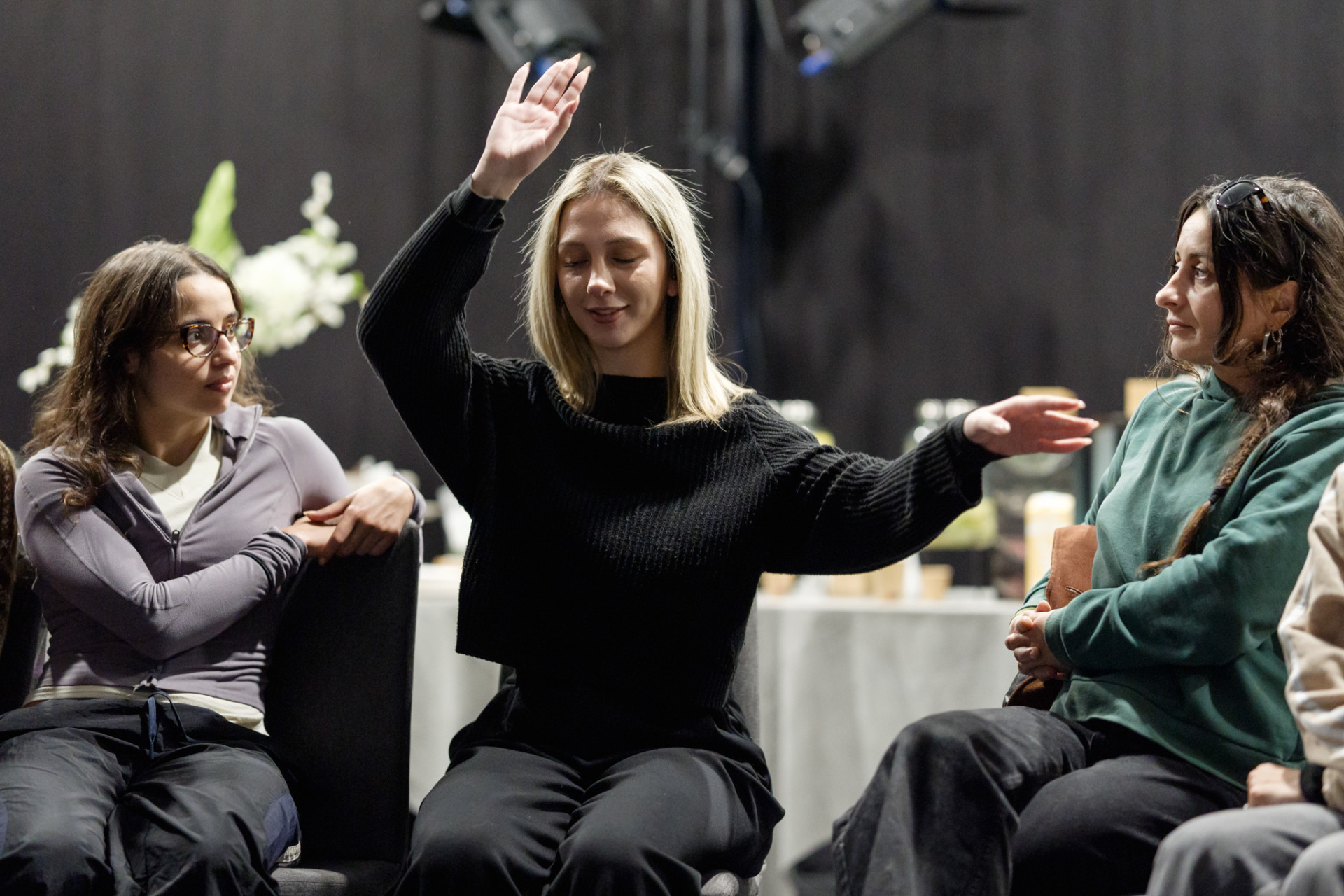
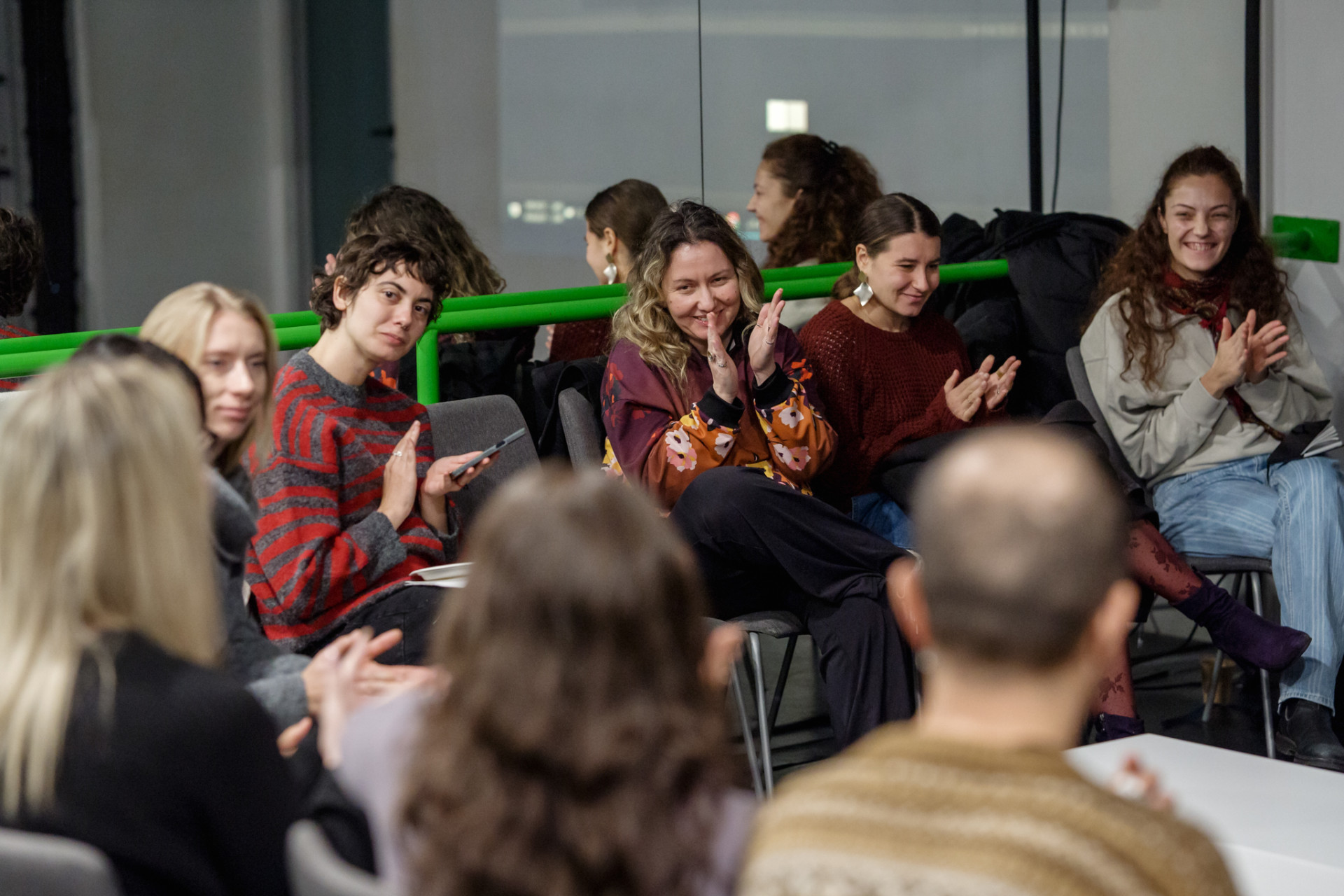
At /SAC Berthelot, the international artists met with artists, choreographers, producers and curators from Romania and other European countries for ** Growing Movements Workshop & Community Get-Together,** a workshop facilitated by choreographer Simona Deaconescu.
Over the course of several hours, conversations revolved around essential questions for today’s independent arts scene: Under what conditions do we make art today? How do geography and access to resources shape artistic journeys? How can we build ethical collaborations and communities that support one another?
It was a space for meeting and exchanging experiences, practical knowledge and perspectives, as well as an opportunity to collectively imagine new ways of supporting and developing the dance ecosystem.
8 November | Dance, exchange & what’s next?
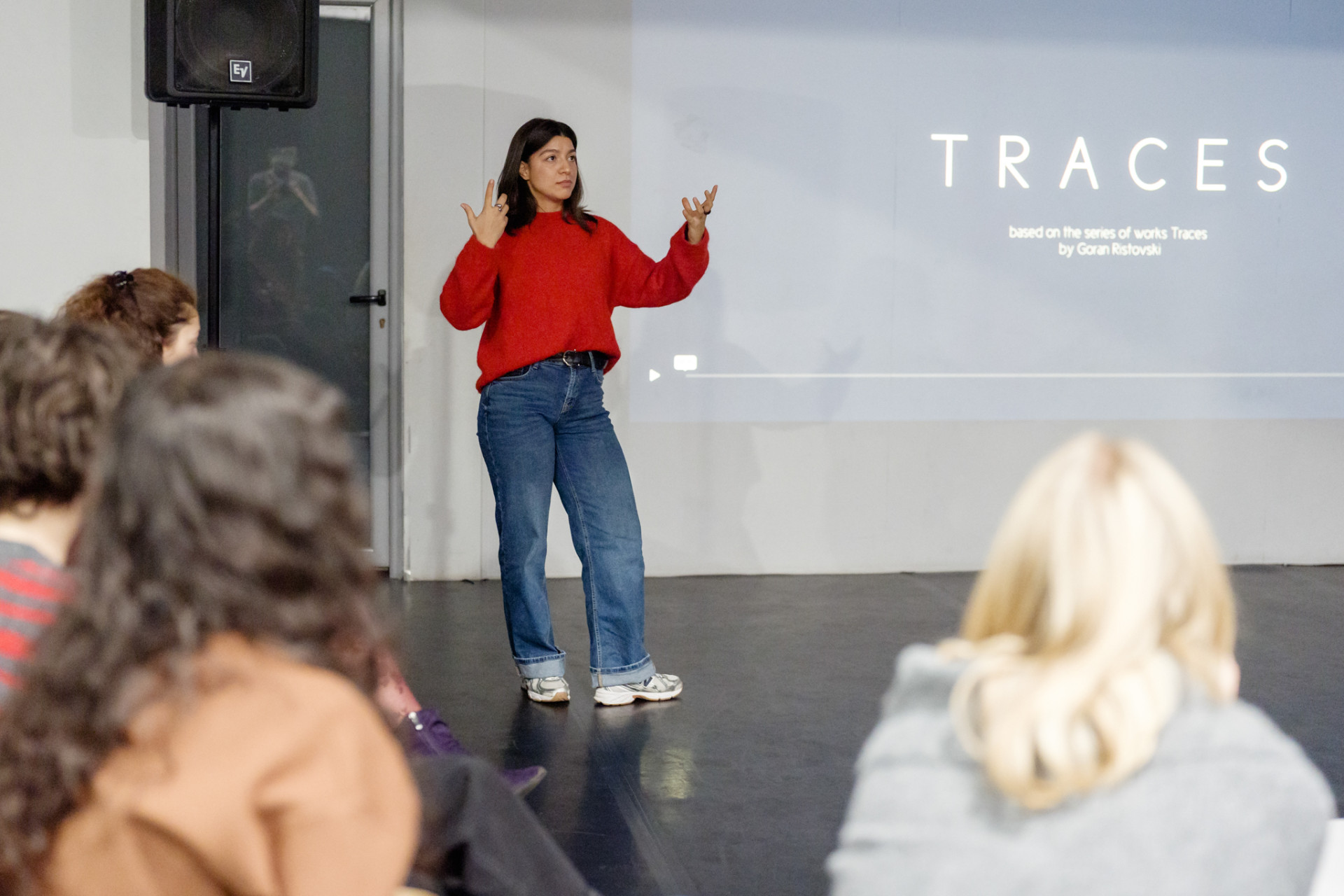
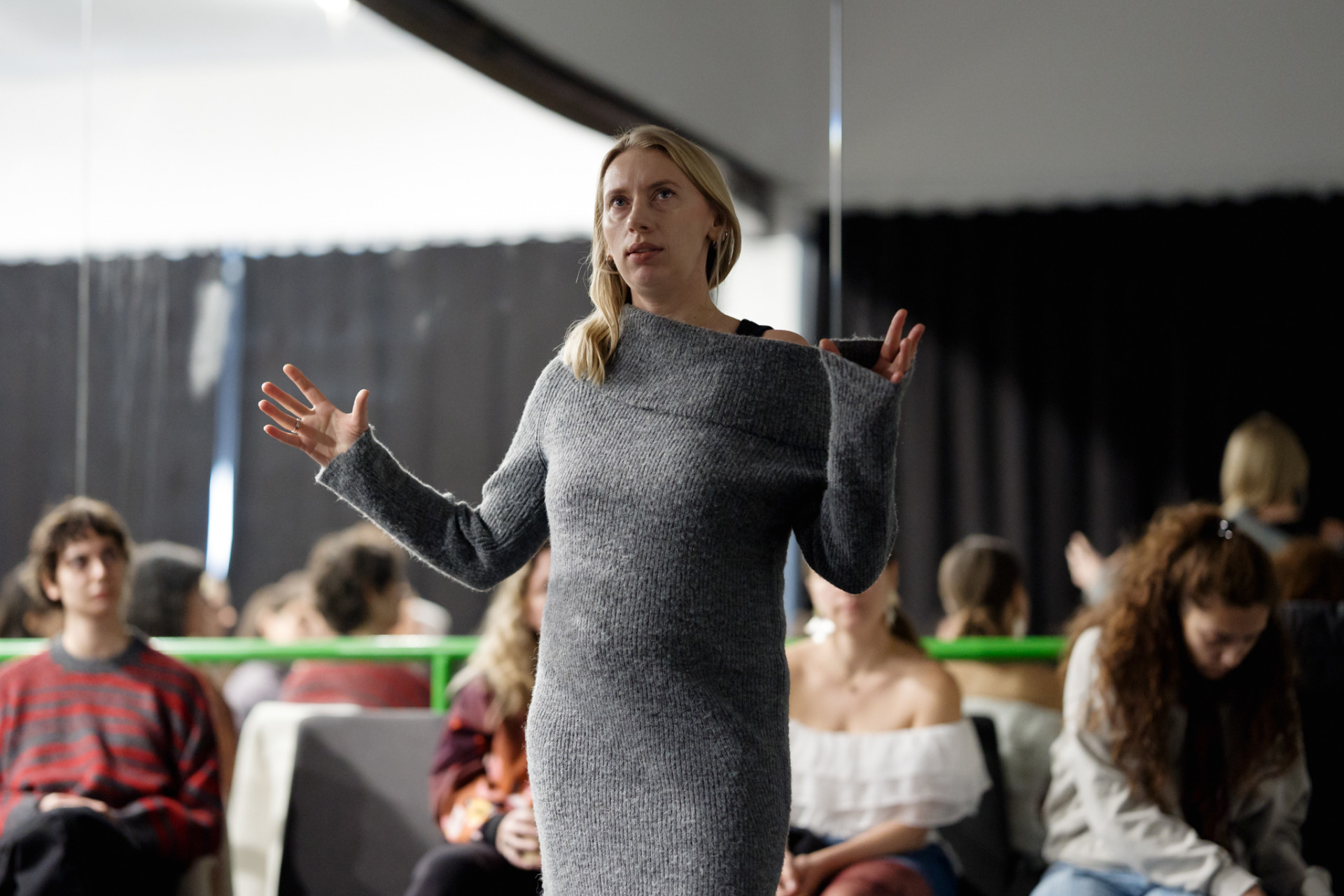
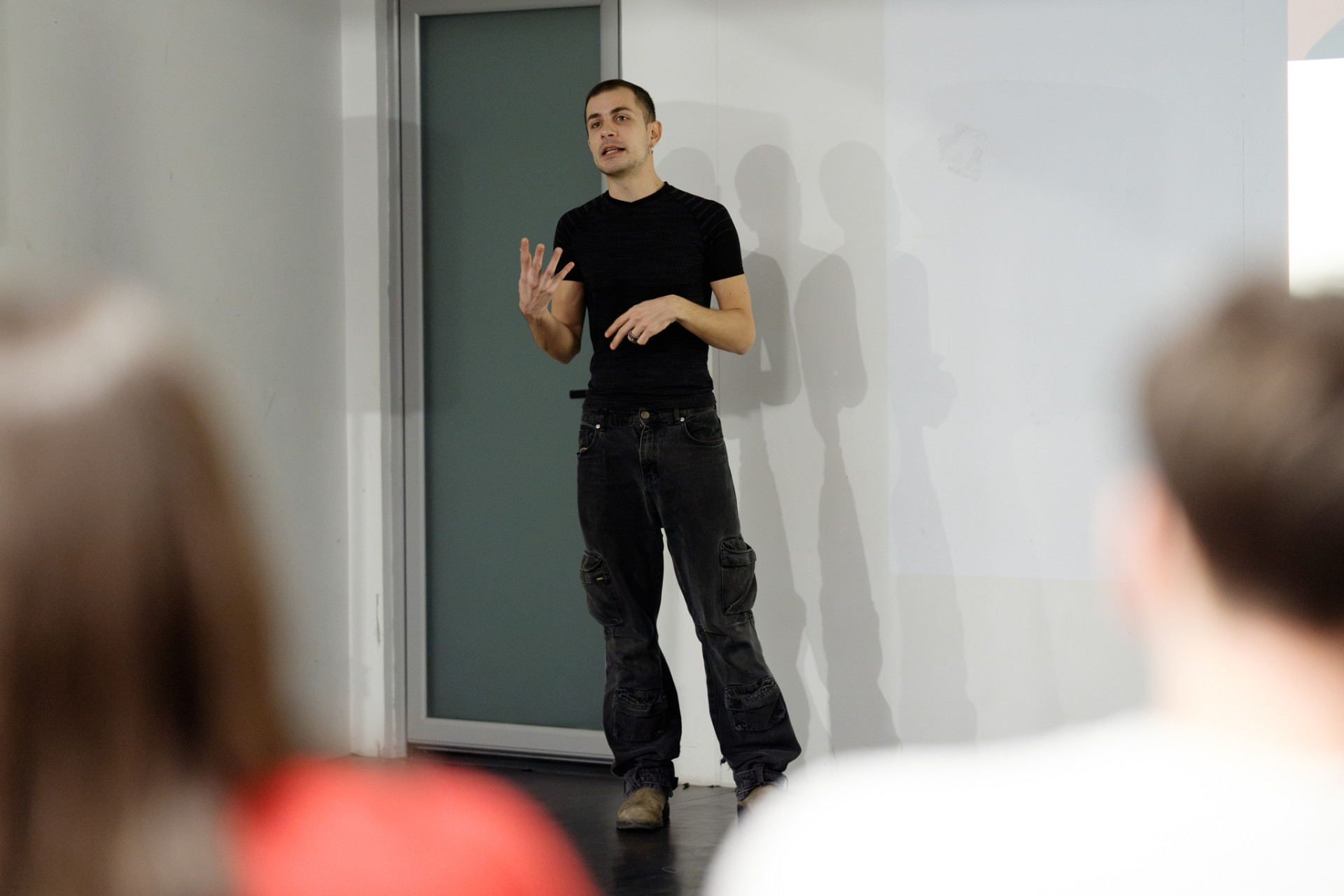
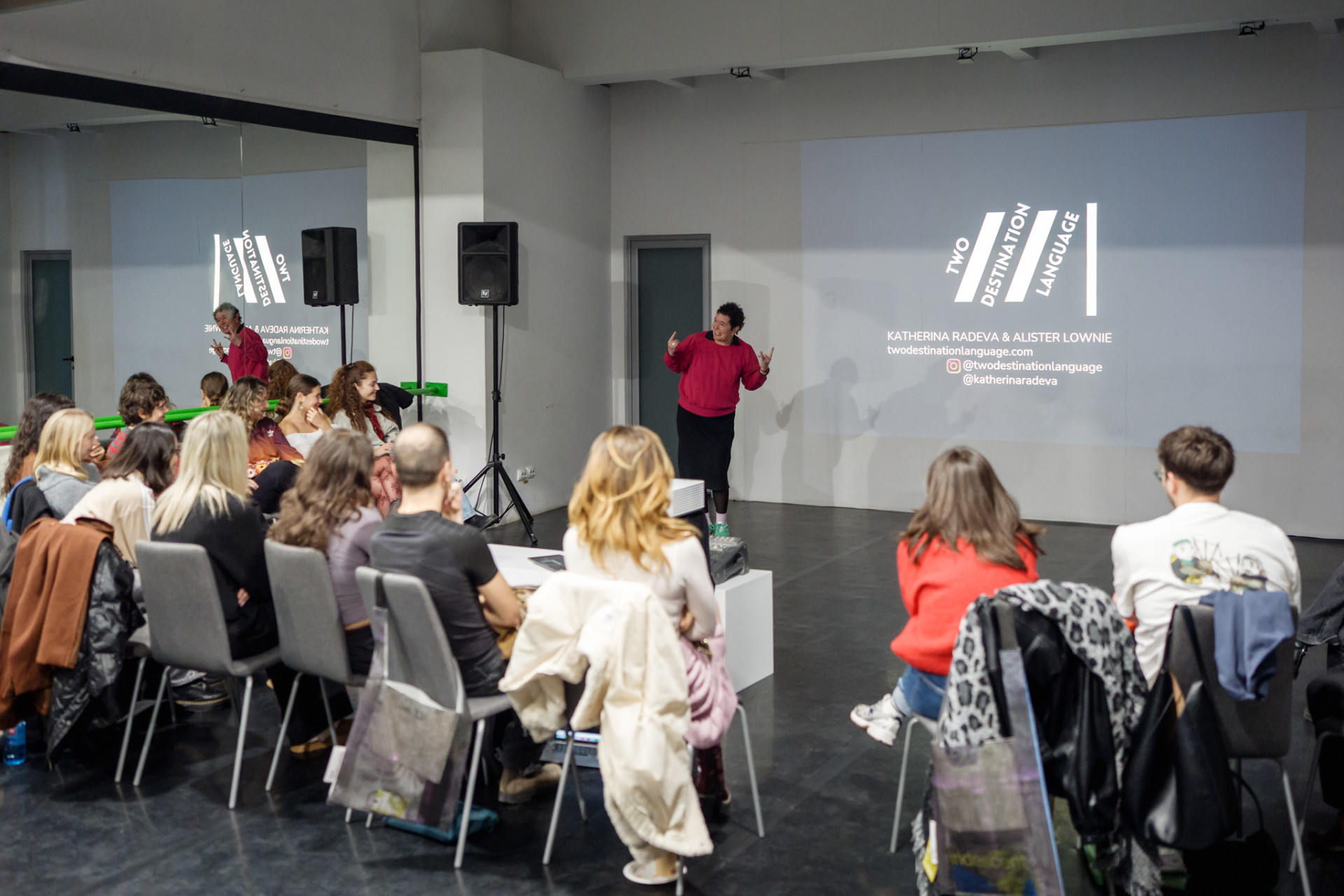
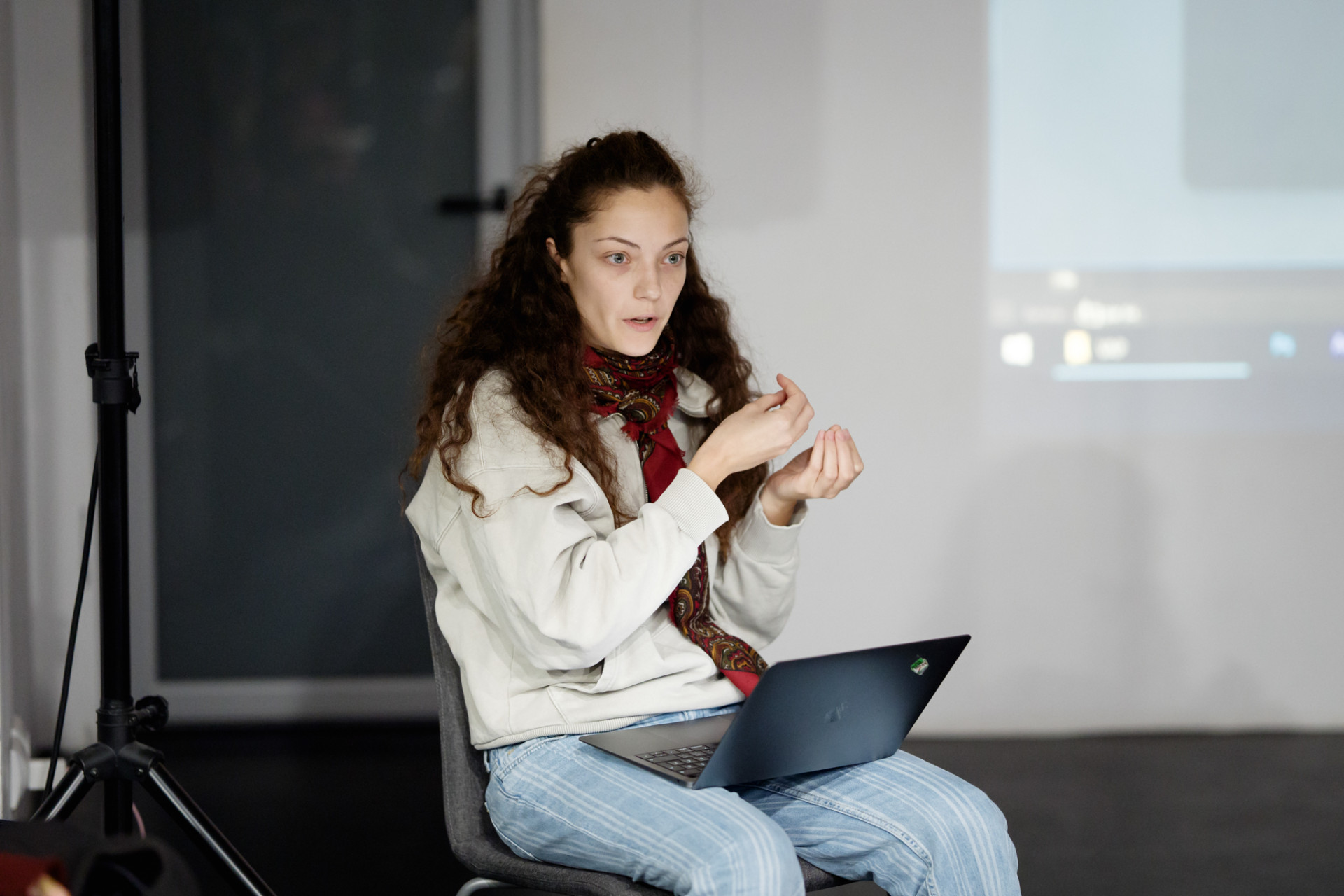
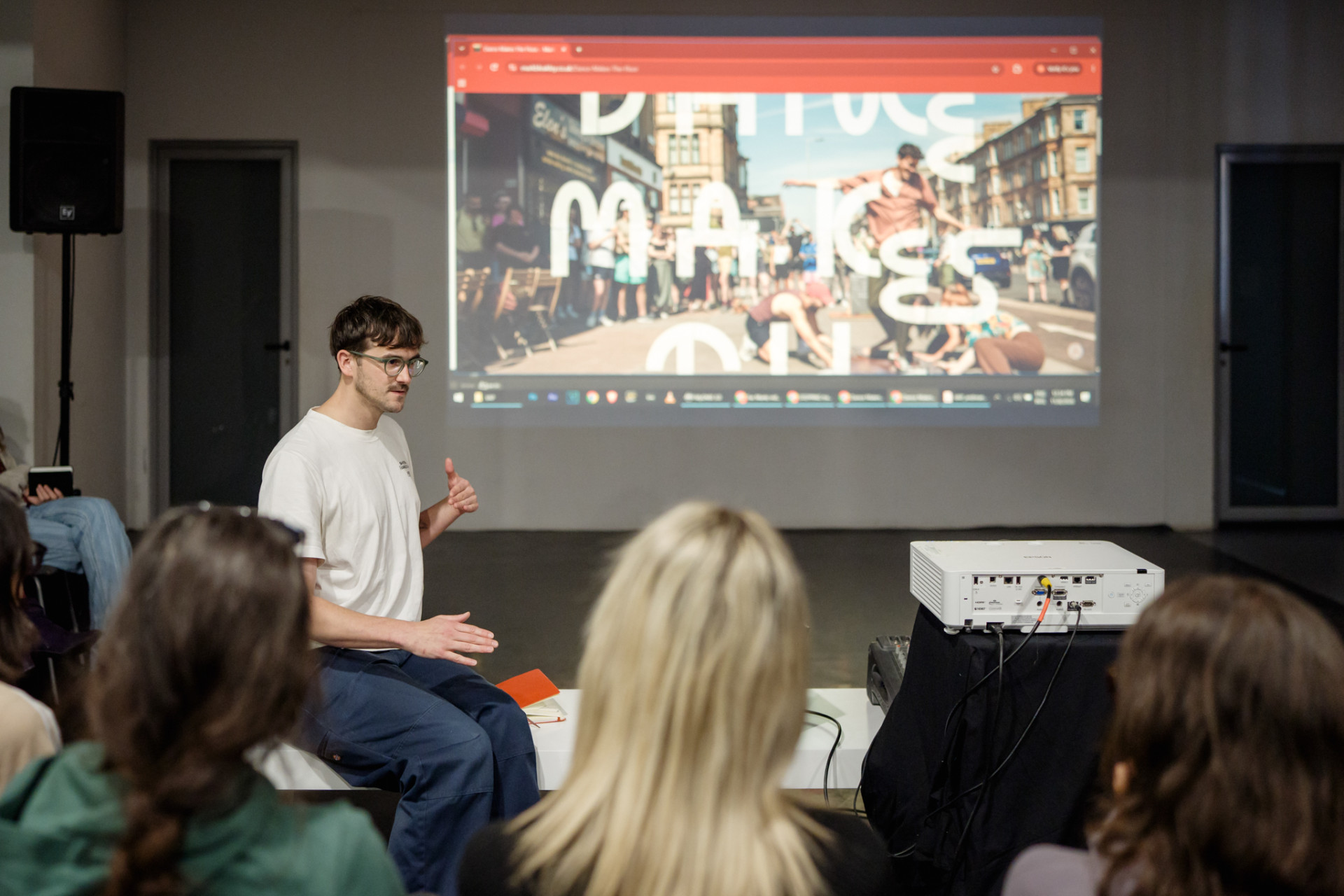
The day began at CNDB with ** Morning Encounters: Dance & Exchange, a gathering dedicated to artistic practices and dialogue between the Visiting Artist Programme guests and Bucharest’s performing arts scene.**
The artists spoke about their journeys, artistic concerns, working contexts and potential directions for future collaborations. They shared experiences, discovered common ground and brought different perspectives on contemporary European dance into dialogue.
The programme concluded that evening with ALL’ARME, a performance by choreographers Ginevra Panzetti and Enrico Ticconi. Created for six female dancers, the performance explores the relationship between individual movement and collective force, drawing on military choreographic vocabulary and the historical meanings of the word “alarm”.
Beyond the programme
Three days can mean much more than a programme of performances, workshops and gatherings. They can mean ideas coming together, questions left open, perspectives shifting and connections continuing to grow long after the festival comes to an end.
What remains are the conversations after the performances, spontaneous encounters, off-the-schedule moments, friendships and, perhaps, the first outlines of future collaborations.
We are delighted to be part of this European network and would like to thank all the participating artists and partner organisations for their openness, generosity and the energy they brought to this gathering.
What stays after the encounter…
Katherina Radeva
“Over the course of this long weekend we watched four shows – two on stage, one in a museum and one in a tiny apartment somewhere in the city- two Romanian works, one by Italian choreographers working with a Croatian company and one by an Albanian artist based in Greece.Politics is how I would describe the shows’ common thread – the politics of touch, the politics of women’s work, the politics of marching and marching on despite the fallen bodies and politics of the end – when is the end and what is left behind.
There are two stand out moments for me- a morning full of presentations of each visiting artist and Growing Movements Workshop.
In a three hour Growing Movements workshop gently hosted, we move a bit, we drink coffee and we imagine the art world anew. We also meet another bunch of creators and curators from Estonia, Greece, Romania, Slovenia.
Artists across Europe are sitting with the same questions, with the same dilemmas, and through this time together -we are slightly better connected in our pursuits.
The following morning – we spend another three hours listening and learning about each other’s artistic practice – what themes are there, where we have danced before and where to hope to dance some more. It’s a compelling and inspirational time – unsurprisingly with many common threads looked upon and explored through our different contexts.
As I leave the city so full of history I am struck by just how much of my time here, amongst these European peers, has been filled imagining the future. And in the future, I hope to return. And in the future I hope to meet them again.”
www.twodestinationlanguage.com www.katherinaradeva.co.uk
Andrea El Ameri
“Grateful to have been part of this gathering of bodies, ideas and practices. To discover different ways of approaching dance and artistic research, coming from different places and backgrounds, yet finding so much in common. To explore the beauty Bucharest, connecting with its people, its history and its contemporary dance scene. Leaving with new questions, unexpected connections, and feeling touched by other reconfigurations of the sensible.”
https://www.andreaelameri.net/en
Dora Pocedić
“My time at Iridescent Festival in Bucharest, as part of the Visiting Artists Programme supported by Dance Week Festival Zagreb, was a wonderful experience. It was a great opportunity to discover new artistic perspectives, connect with other artists and professionals and exchange ideas. I especially appreciated the welcoming atmosphere and the diversity of voices and approaches brought together by the festival.”
https://uo-co-mment.hr
Gianmaria Borzillo
“I had the chance to discover the IRIDESCENT festival through the Visiting Artist program, at the invitation of the Italian institution IRA Institute. It was a very interesting and moving experience. Besides getting to know the Romanian art scene, the city of Bucharest, and the 8 other artists from across Europe, what struck and touched me most was encountering a space of resistance and struggle by an artistic community that refuses to give in to the poverty of current cultural policy. Nothing could be more inspiring.
I am immensely grateful to the entire festival staff, whose programming is rich in ideas and reflections on where choreography is heading. I sincerely hope to return, as a spectator and/or invited artist, to this precious context that deserves to be protected.”
The Visiting Artist Programme is co-funded by the European Union’s Creative Europe programme.