International Dance Day 2026: A Message from UNESCO and a Wake-up Call from Romania

On the occasion of International Dance Day, celebrated annually on April 29, the International Dance Committee of the International Theatre Institute (ITI), a UNESCO partner, invites, as it does every year, a leading figure in the field to deliver a global message dedicated to the art of dance. You can read it at the end, but the National Dance Center wishes to place this day in a context it deems necessary.

In Romania, this symbolic day comes amid major difficulties for professionals in the sector. On March 2, 2026, over 300 artists, cultural managers, and supporters of contemporary dance submitted a comprehensive petition to the Ministry of Culture, highlighting serious structural issues affecting the field’s development. To date, the Ministry of Culture has not responded to those who submitted the petition.

The document draws attention to a persistent reality: dance remains one of the few arts in Romania without adequate infrastructure. From training institutions, such as choreography high schools, to leading organizations like the National Dance Center in Bucharest, artists face an acute shortage of spaces for rehearsal, creation, and performance.

This situation directly affects independent artists, as well as nongovernmental organizations and artistic collectives, which often operate under precarious or makeshift conditions. The lack of infrastructure limits not only artistic production but also the public’s access to this form of cultural expression. The full statement can be viewed here.

In an international context where dance is celebrated as an essential form of expression and cultural dialogue, Romania’s artistic community is calling for concrete and urgent measures to support a field that is on the brink of survival.

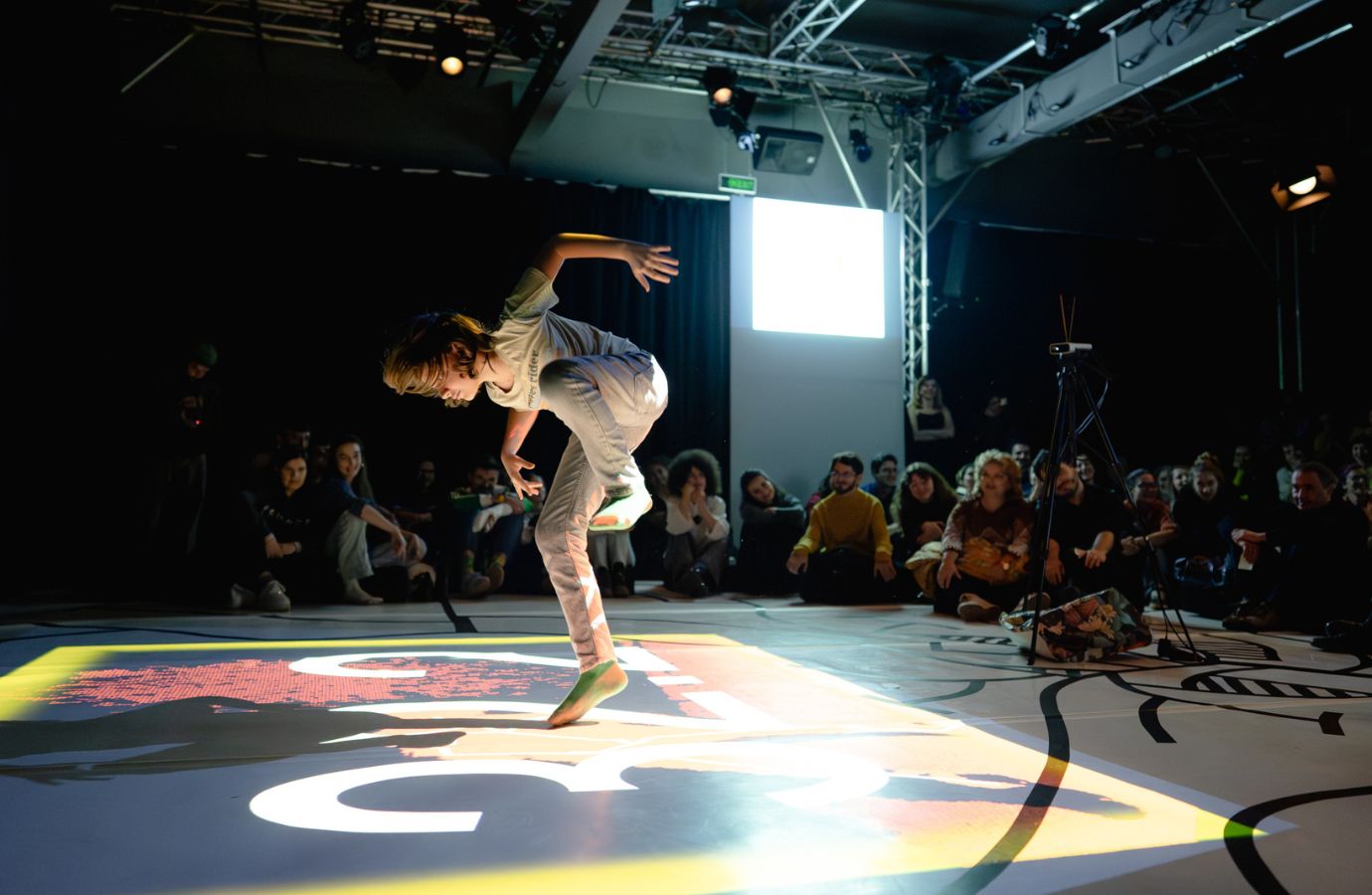
To mark International Dance Day, the CNDB has decided to celebrate the occasion with a full day of free events that celebrate movement, connection, and dance as a universal language. The events, brought together under the name DANSOTECA, offer the public four workshops: Enter the Flux, led by George Pleșca; It Takes Two (Iulia Andro & Mihai Petrini); Dancing through rep (Laura Murariu); and Waacking Workshop (Waana Neagu). At the end of the day, the public is invited to a DJ set (Sillyconductor & Rekabu), where leftfield disco glides seamlessly into rhythms drawn from entirely different latitudes. Details about the event and registration can be found here.

Message for International Dance Day – April 29
International Theatre Institute (ITI)
World Organisation of the Performing Arts
Author of the message: Crystal PITE, Canada

Humans move – our arms reach out, our knees collapse, our heads nod, our chests cave in, our backs arch, we jump, we shrug, we clench our fists, we pick each other up and push each other away. This is language as much as it is action. This is what the body has to say about need, defeat, courage, despair, desire, joy, ambivalence, frustration, love. These images flash with meaning in the mind because we have felt these things so purely in the body – we have been moved.

We are dancers, all of us. Life moves us; life dances us. Ephemeral as breath, concrete as bone, a dance is made of us. We sculpt space. We write with our bodies in a wordless language that is deeply understood. We grace the space within and around us when we dance. 

Like life, a dance creates and destroys itself in every moment. Like love, it is beyond reason. 

I like to think of the body as a location; a place where being is held and shaped. When we dance, we are profoundly engaged in being there.

I’m writing this in early 2026, when there seems to be no end to the oppression, upheaval and suffering in our world. Daily, as we witness the horror of what humans are capable of doing to each other and the machinery of power that funds and fuels unspeakable violence to people and planet, dance feels like a facile, useless response. It’s hard to imagine what a dance artist can do in a world that so badly needs radical change and healing. 

And yet – art, like hope, is a form of love. Defiantly generative in the face of desecration, art is a solvent for the calcifying mind and a balm to heal it. Art is a vessel to hold us while we grapple with questions – together – in a way that is different from news, different from documentary and education, different from opinion and social media, different from activism and protest, but not incompatible.

Through creativity, we accumulate resistance and hope through small acts of courage, curiosity, kindness and collaboration. In dance, and in dance-making, we find proof that humanity is more than our latest heartbreaking global failure.

But dance needs no justification, no explanation. It’s made of us yet owes us nothing. It only needs to inhabit a willing body. From that location, it can translate the ineffable; acting as an intermediary between us and the unknown. 

We are moved by these vanishing traces of beauty in the present moment. And as we embody both the dance and its disappearance, we are reminded of our impermanence. At the same time, if we are paying attention, dance will give us an occasional glimpse of the soul.

Biography

Canadian choreographer Crystal Pite is a former company member of Ballet British Columbia and William Forsythe’s Ballett Frankfurt.

In a choreographic career spanning 35 years, Pite has created more than sixty works for companies such as The Royal Ballet, Nederlands Dans Theater, The Paris Opera Ballet, and The National Ballet of Canada. She is known for works that courageously address themes such as trauma, addiction, conflict, consciousness and mortality; her bold and original vision has earned her international acclaim and inspired an entire generation of dance artists.

She is an Associate Artist at three institutions: Nederlands Dans Theater, Sadler’s Wells (London) and Canada’s National Arts Centre. She has an honorary Doctorate of Fine Arts from Simon Fraser University, is a Member of the Order of Canada and holds the honour of Officier de l’Ordre of Arts et des Lettres from France.

In 2002, she formed Kidd Pivot in Vancouver, a company that strives to distill and translate universal questions into artworks that connect us to essential parts of humanity. World-renowned for radical hybrids of dance and theatre, Kidd Pivot tours internationally with critically-acclaimed works such as Betroffenheit, Revisor, and Assembly Hall (co-created with Jonathon Young), The Tempest Replica, Dark Matters, Lost Action, and The You Show.

Pite’s many awards include the 2022 Governor General of Canada’s Performing Arts Award, the 2011 Jacob’s Pillow Dance Award and the Canada Council’s 2012 Jacqueline Lemieux Prize. In 2017, she received the Benois de la Danse for her creation The Seasons’ Canon at the Paris Opera Ballet. In 2018, she received the Grand Prix de la danse de Montréal. She is the recipient of five Sir Laurence Olivier awards for creations with Kidd Pivot and The Royal Ballet.


Parteneri
Radio Guerilla, Scena9, Zile și Nopți, Adevărul, Agerpress, Elle, Happ.ro, Liternet, TVR Cultural, Radio România Cultural, Revista Arta, The Institute, Zeppelin, ISCOADA, Revista Golan, Feeder, Visit Bucharest, Ziarul Metropolis, IQads, Ceașca de Cultură, Modernism.ro, Daily Magazine, Munteanu Recomandă.
The CNDB Media Library’s April recommendation features two books by dance theorist André Lepecki

The CNDB Media Library’s April recommendation features two books by dance theorist André Lepecki and a presentation by him on April 21, from 3 to 5 p.m., as part of the ICCD 2026 conference. More information about the event can be found HERE.

Exhausting dance. Performance and the Politics of Movement//Routledge 2006

The translation of dance theorist André Lepecki’s exceptional book, even 20 years after its publication, is particularly important for the development of dance studies in Romania—a field that has received little attention—and serves to inform choreographers, dancers, and researchers in the performing arts.

In the book’s seven chapters, Lepecki develops his argument regarding the ontological connection between dance and movement, analyzing a series of performance works by choreographers and visual artists who transformed the contemporary dance scene in the early 1990s in Europe and the United States: Jérôme Bel (France), Juan Dominguez (Spain), Trisha Brown (USA), La Ribot (Spain), Xavier Le Roy (France-Germany), Vera Mantero (Portugal), Bruce Nauman (USA), and William Pope.L (USA). Through their dynamic and explicit dialogue with the performing arts, visual arts, and critical theory over the past thirty years, this new generation of choreographers challenges our understanding of dance by exhausting the concept of movement.

“The Act of Stillness shows how, in modernity, the dust of history can be stirred up to blur the artificial divisions between the sensory and the social, the somatic and the mnemonic, the linguistic and the corporeal, the mobile and the immobile. Historical dust is not merely a metaphor. Taken literally, it shows us how historical forces penetrate deep into the inner layers of the body: by settling within the body, the dust stiffens the smooth rotation of the wrists and joints, fixing the subject in ever-prescribed directions and steps, fixing movement within certain politics of time and place. Through the paradoxical act-of-stillness, experimental choreography examines the tension within the subject, the tension within the subjectivity subjected to the force of the historical dust settling within the body.” (André Lepecki)

The book is available for consultation at the CNDB Media Library and can also be purchased from the CNDB, Stere Popescu Hall, 80–82 Mărășești Boulevard. Price: 50 lei.

The senses in performance// Eds. Sally Banes și André Lepecki//Routledge//2007

The Senses in Performance examines the subtle workings of the human senses—including taste, touch, smell, and sight—across a diverse range of performances from Western and non-Western traditions, spanning from ritual to theater, from dance to interactive architecture, and from performance art to historical opera. With eighteen original essays by renowned scholars and artists, including Richard Schechner and Philip Zarrilli, the anthology spans a variety of disciplinary fields, from critical studies to performance studies, from food studies to ethnography, from drama to architecture.

“Sensory performances reveal histories—they propose practices, highlight certain materials, reflect social conditions, and employ techniques. And in each of these stages, a body is constructed—even if only for a moment—even if only for the duration of a single performance.” (Sally Banes and André Lepecki)

Find more information about the resources available at the CNDB Media Library HERE.

Unauthorized Movements. First Presentations at CNDB

There are movements we make without thinking, and others we learn to control. Sometimes, there is an unstable zone in between, where the body no longer fully follows the rules. That is where “Unauthorized Movements” begins.

Project Concept

The focus on analyzing, measuring, and optimizing human movement runs through industrial modernity. Within scientific management and other practices developed in the late 19th and early 20th centuries, movement became a central object of study and intervention. Human activity was reorganized according to criteria of efficiency and productivity. Whatever did not fit these norms became, by default, unauthorized. The body was thus integrated into a precise, repetitive, and controlled system of operation.

Mișcarea este astăzi cartografiată, codificată și limitată printr-o varietate de mecanisme, de la frontiere geopolitice și infrastructuri urbane, la tehnologii de supraveghere, dispozitive de tracking și norme sociale internalizate. În acest context corpul funcționează simultan ca obiect de control și ca mediu de negociere. Cum evită corpurile, identitățile și gesturile taxonomiile puterii?

Cele 4 lucrări semnate de Eduard Gabia, Paula Dunker, Ana Costea, Mihai Mihalcea & Mara Bugarin în cadrul proiectului Mișcări neautorizate se înscriu în acest câmp de reflecție și îl abordează dintr-o perspectivă performativă. Proiectul investighează potențialul eliberator al mișcării și al dansului de a genera spații de gândire în care ceea ce scapă codificării, clasificării sau recunoașterii ne inspiră.

Într-un context din ce în ce mai problematic în care autoritarismul și controlul se intensifică și insistă asupra sistematizării și supravegherii fiecărui aspect al existenței, proiectul Mișcări neautorizate reclamă dreptul la libertatea de mișcare în forme care nu pot fi capturate și controlate. A te mișca fără permisiune înseamnă a revendica spațiu într-o lume care caută să îl delimiteze. A crea mișcare înseamnă a afirma prezența imprevizibilului, a necunoscutului, a libertății.

About the performances and artists

“Unauthorized Movements” brings together four works that view the body as a site of tension between control and deviation, between what is permitted and what slips away.

Eduard Gabia works with the idea of translation (between language and body, between instruction and action) in a process where meaning is constantly lost and reconstructed.

Paula Dunker starts with text and pushes it into the body, in an accumulation that becomes physical, intense, hard to stop, almost impossible to keep in shape.

Ana Costea brings to the forefront gestures that are usually viewed as “outside the norm” (adjusting, repetitive, intimate movements) and proposes them as a form of presence and expression.

Mihai Mihalcea & Mara Bugarin together construct a space where history, fiction, and the present overlap, and the body becomes the place where these layers meet and destabilize one another.

Împreună, aceste lucrări nu oferă o singură direcție, ci mai degrabă deschid un câmp: moduri diferite în care mișcarea poate ieși din ceea ce e previzibil.

Schedule

On April 19 and 26, 2026, at 7:00 p.m., the National Center for Dance in Bucharest will host the first performances as part of the Unauthorized Movements project.

The two works—CODE-SWITCH by Eduard Gabia and this is a lot, but there is more and more is more by Paula Dunker—will be presented as a double bill on both evenings.


CODE-SWITCH
by Eduard Gabia
Duration: 46 min

The performance explores the relationship between language, movement, and action through a process of translation between different systems. Starting from the structure of a lecture on effective communication, the performer’s body attempts to translate verbal instructions into gestures and choreographed actions, generating a space in which meaning is not fixed but continuously negotiated.

this is a lot, but there is more and more is more
by Paula Dunker
Set design: Mălina Ionescu
Music: Alex Bălă
Duration: approx. 40 min

The work begins with a poetic text that is brought to life through performance, in a journey where voice, body, and action construct a space of exposure and transformation. In this context, the proposed gestures and images become ways of exploring the relationship between vulnerability, labor, and emotion.


Organization and partners

Production
A project by the Solitude Project Cultural Association, in partnership with the National Centre for Dance in Bucharest.

Co-funded by
The Administration of the National Cultural Fund.
The project does not necessarily reflect the views of the Administration of the National Cultural Fund. The Administration of the National Cultural Fund is not responsible for the content of the project or for how the project’s results may be used. These are entirely the responsibility of the grant recipient.

Partners
Brain Store Project, Antistatic International Contemporary Dance Festival, Reactor for Creation and Experimentation

MOVIDA project starting

Starting today, April 1, the MOVIDA project (Movement and Virtual Intelligence for the Development and Accessibility of Artists and Audiences) is officially launched, with the National Dance Center Bucharest (CNDB) among its partners, and aims to explore how artificial intelligence can support contemporary dance, from artist development and audience engagement to increasing accessibility for people with disabilities and mental health challenges.

Movement and Virtual Intelligence for the Development and Accessibility of Artists and Audiences (MOVIDA) aims to explore the possibilities for Artificial Intelligence (AI) and related technologies in contemporary dance to: build capacity for artists; use these technologies for audience development and engagement; and improve accessibility for persons with disabilities and mental health issues. The project starts 1st April 2026 and runs for 3 years. MOVIDA partners will run multiple activities to engage with artists and audiences: Labs, Residencies, Showcases, Forums, Podcasts and an online Knowledge & Tools Hub. 

To promote synergies between art and technology, the consortium is composed of 11 partners: 5 dance centers; 4 academic institutions with expertise in AI; and 2 institutions in the field of mental health and disability (accessibility partners); across 5 countries. The dance centers are Sõltumatu Tantsu Lava (STL, Estonia), Tanzhaus NRW (Germany), O Espaço do Tempo (OEDT, Portugal), Centrul Național al Dansului București (CNDB, Romania) and Antistatic (Bulgaria). The academic institutions are: Tallinn University (TLU, Estonia), Hochschule Düsseldorf (HSD, Germany), Interactive Technologies Institute (ITI, Portugal) and Universitatea Naţională de Artă Teatrală și Cinematografică “I.L. Caragiale” din București (UNATC, Romania). The 2 institutions in the field of mental health and disability (associated partners) are: Peaasi (Estonia) and Entuziart (Romania).

MOVIDA is co-funded by the Creative Europe programme of the European Union. MOVIDA is a follow-up project to the recently concluded MODINA (2023-26), which had the same duration and EU funding, and with the same coordination.

Links:

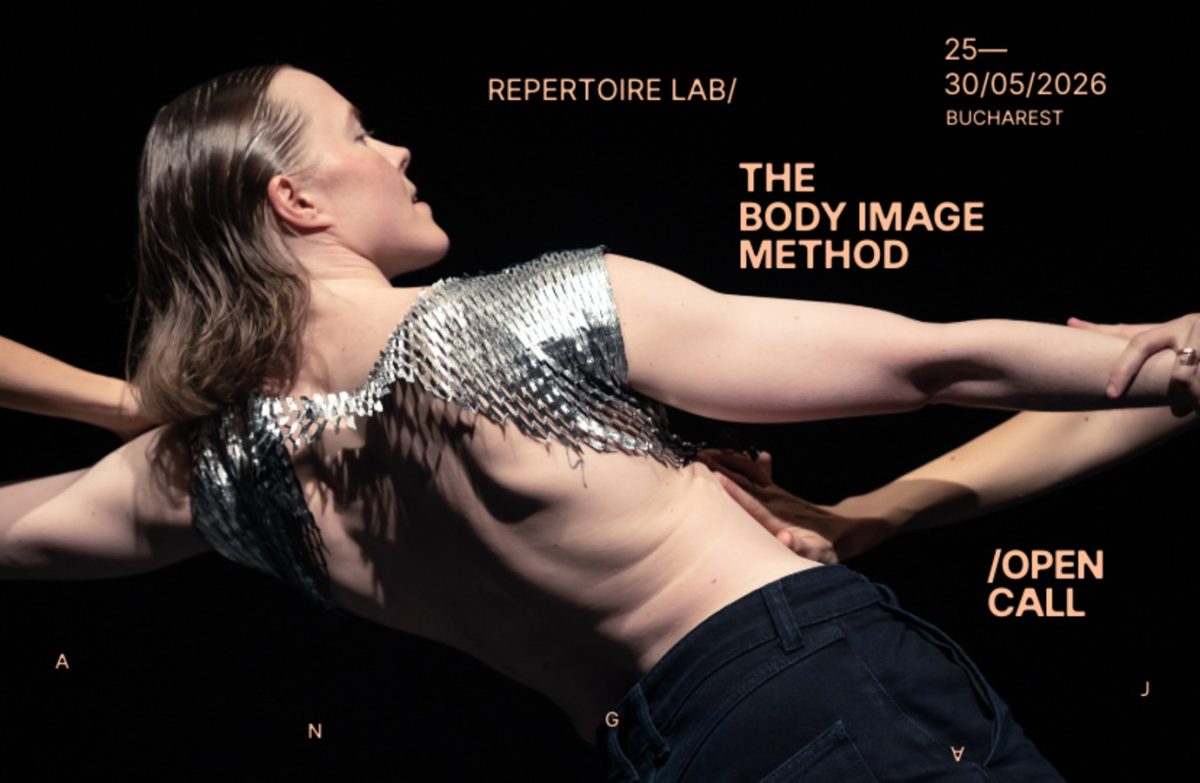
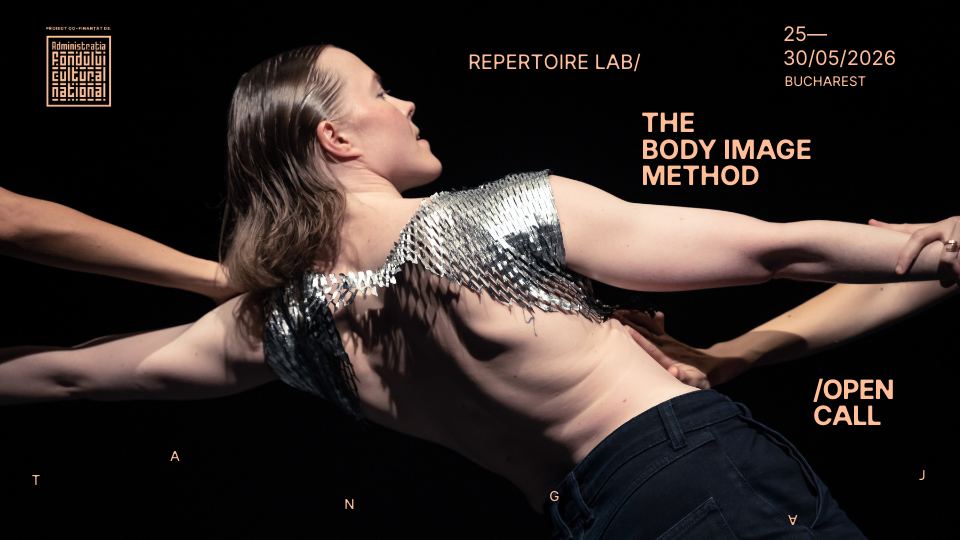
OPEN CALL: Tangaj Collective – Repertoire lab & audition

with Simona Deaconescu & Simona Dabija
May 25th – May 30th, 2026
Application deadline: April 6th, 2026

Tangaj Collective opens a repertoire laboratory in Bucharest for dancers ready to enter our working process and ongoing projects. The laboratory is conceived as a shared space of practice and selection. At the end of the process, at least two dancers will be invited into collaborations within the collective’s upcoming projects.

Apply HERE.

SCHEDULE
Submission deadline: April 6, 2026
Announcement of selected participants: April 15, 2026
Repertoire workshop: May 25th – May 30th, 2026
Workshop timetable:
May 25th – May 29th, 2026: 10:00—16:00
May 30th, 2026: 13:00—19:00
Location: Linotip – Independent Choreographic Centre, Bucharest, RO

CONDITIONS
A total of 16 participants will be selected — 10 dancers from Romania and 6 dancers from other European countries.
Participation in the workshop is free of charge.
International participants will receive travel and accommodation support of up to 550 EUR.
At the end of the workshop, at least two dancers will be selected for upcoming projects, with prospective periods outlined in the application form.

The laboratory is addressed to dancers engaged in research-driven practices and interested in long-term collaboration.

ABOUT THE LAB

Tangaj Collective, founded by Simona Deaconescu, has been developing choreographic works at the intersection of dance, speculative research, and interdisciplinary collaboration for over 12 years. The company creates atmospheric, concept-driven performances that explore how bodies relate to real and imagined ecosystems, while critically engaging with forms of collective behavior. Its works are developed through international collaborations and presented across festivals and venues in Europe and beyond.

The Body Image Method is the movement research practice that underpins Tangaj’s work. It approaches the body as a shifting system, working through perception and temporality to reorganize movement. Through tools that stretch, compress, and dislocate time, dancers explore alternative physical states and image-driven transformations of the body.

During this repertoire laboratory, participants will enter Tangaj Collective’s choreographic process, working with fragments of repertoire while engaging with compositional tools that generate new movement material and collective experimentation.

The workshop is facilitated by Simona Deaconescu, accompanied by Simona Dabija, performer and emerging choreographer, one of the longest collaborators of the company.

Read more HERE.

This workshop is part of the project Extended Bodies. Performative Routes, co-financed by the Administration of the National Cultural Fund. The program does not necessarily represent the official position of the Administration of the National Cultural Fund. AFCN shall not be held liable for the program’s content or any use to which the program outcome might be put. These are the sole responsibility of the beneficiary of the funding.

Moving Balkans: Open call for participation in workshop for producers and cultural managers

24–29 June 2026, Sofia

Are you a producer or cultural manager working in contemporary dance and the performing arts? Do you have at least 2 years of professional experience and want to strengthen your skills in fundraising, project development, touring, festival and artist management while expanding your international network? We invite you to apply for a 5-day residential workshop in Sofia (Bulgaria), complemented by online sessions taking place prior to the on-site program. Hosted by Derida Dance Center.

Application deadline: 3 April 2026 at 23:59 CET
Application form: HERE

The workshop will host professionals from the contemporary dance field, including producers, arts managers, project/operational managers, cultural entrepreneurs, curators, agents; professionals with minimum 2 years of experience in production/cultural management in performing arts. There is no age limit.

Eligibility: nationals or legal residents of: Slovenia, Croatia, Serbia, Bosnia and Herzegovina, Albania, Greece, North Macedonia, Montenegro, Kosovo*, Romania, Bulgaria, Türkiye.

Derida Dance Center (the host organization) will financially cover the workshop, travel expenses and accommodation.

ABOUT THE WORKSHOP

The participants will gain practical tools and frameworks for fundraising & project writing, skills in cultural diplomacy and international networking, insights into festival management, business development for producers (touring, partnerships, artist & tour management), hands-on exercises, group work, real-life case studies, peer exchange in a multicultural environment.

Mentors:
Kathrin Deventer – European Festivals Association, Secretary General
Giulia Poltronieri – Cultural Manager
Magnus Nordberg – Nordberg Movement, Founder
Maria Popović – SKCNS, Cultural Manager & Fundraiser
Atanas Maev – Derida Dance Center, CEO & Co-founder
More info about the mentors are available HERE.

ABOUT THE APPLICATION

Please prepare a CV and a motivation statement describing your experience, interests, and what you want to develop through this program. Submit via Google Forms.

Additional questions: admin@derida-dance.com and carmen.cotofana@cndb.ro

Collective call for contemporary dance: 300 artists submit a memorandum to the Ministry of Culture

On March 2, representatives of Romania’s contemporary dance community submitted a memorandum to the Ministry of Culture, written and signed by over 300 artists, choreographers, cultural workers, and supporters of the independent scene.
This memorandum, written and signed by over 300 artists, choreographers, cultural workers, and supporters of the contemporary scene, stems from a real emergency, but it speaks to something that concerns us all: access to culture, artistic diversity, and a possible future for contemporary dance in Romania.
The initiative is the result of a public meeting organized by the National Centre for Dance Bucharest (CNDB) on January 29, attended by representatives of the community and Mr. András István Demeter, Minister of Culture, together with Mr. Bogdan Trîmbaciu, director of the Project Management Unit within the ministry. The memorandum summarises the conclusions of that dialogue and proposes concrete measures to consolidate and stabilise the sector.

Read and join this initiative!
The full memorandum is available HERE.

Final, but not really…

Choreography performances – bachelor’s and master’s degrees, 2026

Between February 27 and March 1, at CNDB, Stere Popescu Hall, you can see the graduation performances of fourth-year students from the Performing Arts – Choreography program at UNATC “I.L. Caragiale,” free of charge.

It is an open invitation to discover a new generation of choreographers.

The projects will also be hosted in other venues such as Linotip – Independent Choreography Center and UNATC (Atelier Hall).

CNDB performance schedule:

FB event link FB

NEUITARE by Ioana Goia
February 27, 2026, 7 p.m., CNDB
Details and reservation form HERE.

PRE-PARTY by Dana Silco
February 27, 2026, 8 p.m., CNDB
Details and reservation form HERE.

DEFINITELY KNOT A KISS by Andreea Groșanu
February 28, 2026, 7 p.m., CNDB
Details and booking form HERE.

CLARA by Andra Coșeru
February 28, 2026, 8 p.m., CNDB
Details and booking form HERE.

GRANDPARENTS ARE GETTING SMALLER AND SMALLER by Andra Muntenașu
March 1, 2026, 7 p.m., CNDB
Details and reservation form HERE.

BEAUTIFULLY BROKEN by Alexandra Coman (bachelor’s degree)
March 1, 2026, 8 p.m., CNDB
Details and reservation form HERE.

Romanian-Bulgarian choreographic dialogue: start for “Duets Across Borders” at CNDB

This week, the first stage of the “Duets Across Borders” project began at the National Dance Center Bucharest (CNDB), carried out as part of the Co-productions program of the European platform MOVING BALKANS – the regional contemporary dance platform. The project runs from 2024 to 2027 and is co-funded by the European Union through the Creative Europe program.

The co-production program is developed in collaboration with Art Link Foundation (Bulgaria), the platform’s main partner, and CNDB, bringing together four artists from Romania and Bulgaria: Mariana Gavriciuc and Simona Dabija (Romania), Elena Miroslavova and Deyan Georgiev (Bulgaria).

The first artistic residency takes place at CNDB and brings together Mariana Gavriciuc and Elena Marinova, who have begun a process of research and choreographic exploration in a duet format. This stage marks the beginning of an artistic dialogue built on negotiation, intercultural encounter, and exchange of practices, with an emphasis on collaboration and the development of original choreographic creations in shared working contexts.

The next stage of the project will take place in March at the Derida Dance Centre, where Simona Dabija and Deyan Georgiev will be working.

The project will conclude with public presentations of the works in April 2026 in Bucharest and Sofia. Subsequently, the creations will be included in the MOVING BALKANS showcase, organized between May 13 and 16, 2026, in Novi Sad, thus contributing to the international visibility of the artists involved and the promotion of contemporary dance in the Balkan region.


Project implemented with the financial support of the Creative Europe Program of the European Union and the National Culture Fund of Bulgaria.
*The views and opinions expressed are those of the authors alone and do not necessarily reflect those of the European Union or the European Education and Culture Executive Agency. Neither the European Union nor the funding authority can be held responsible for them.

Moving Balkans partners: Albania Dance Meeting (AL), Art Link Foundation (BG), Contemporary Dance Association Slovenia (SI), Croatian Cultural Center Rijeka (HR), Croatian Institute for Movement and Dance (HR), DAN. C.CE UNITIVA (GR), EN–KNAP Productions (SI), Interart Culture Center (MK), Kino Šiška Centre for Urban Culture (SI), The National Center for Dance Bucharest (RO), Students’ Cultural Center Novi Sad (RS).

In works at CNDB: Samsara – Surrender to Change or Suffer in a Loop

From January to February, the National Centre for Dance in Bucharest is hosting rehearsals for the premiere of Samsara – Surrender to Change or Suffer in a Loop, choreographed by Eva Danciu, providing a workspace for the development and completion of the project.

The premiere of the show will take place on February 26, at 7:00 p.m., in the Atelier hall of UNATC. The work is Eva Danciu’s dissertation project for her Master’s degree in Choreographic Art at the “I.L. Caragiale” National University of Theatre and Cinematography in Bucharest.

Eva Danciu is known to the public from productions such as Memetics (Sergiu Diță & Anca Stoica), Bodies on the Line (Ioana Marchidan), Self ACME. Resort de reechilibrare și optimizare personal (Camelia Neagoe & Adrian Ionescu), Work in Progress (Camelia Neagoe), Val și Cetatea Sufletelor (Vava Ștefănescu), M de la Murphy și Gr(o)ove (Andreea Gavriliu). She is also a graduate of the CNDB Dance and Performance Academy and a teacher at the Performative School for Children, a program launched by CNDB, an initiative dedicated to training and artistic education in contemporary dance and performing arts for children.

Samsara – Surrender to Change or Suffer in a Loop is a physical theater performance that investigates the fragility of the human condition in the context of continuous transformation. The cast includes Adora Tănase, Vlad Ionuț Popescu, Filip Nicolaescu, Andrei Bouariu, and Eva Danciu.

The CNDB team wishes Eva Danciu success with this new premiere!

#CNDBbehindthescenes

Presentation by Funmi Adewolle Elliott at UNATC

Yesterday, artist and researcher Funmi Adewolle Elliott, who is teaching classes for Academy students this week, gave a presentation to students in the Master’s program in Dramatic Writing at UNATC about her experience in choreographic dramaturgy.

In her introduction, she spoke about the intersectional approach between dramatic writing and choreographic composition, based on areas of research such as discourse theory/communication philosophy, cultural studies, and performance studies.

She then presented three contemporary artists of African origin through a brief analysis of one of their plays, on which Funmi collaborated.

Thanks to UNATC and Mihaela Michailov for hosting and facilitating the meeting with the students!


The Academy of Dance and Performance Labs is a cultural programme co-financed by the Administration of the National Cultural Fund.
The programme does not necessarily represent the position of the Administration of the National Cultural Fund. AFCN is not responsible for the content of the project or how the results of the project may be used. These are entirely the responsibility of the beneficiary.

#CNDBbehindthescenes

A new generation of choreographers at CNDB

Between February 2 and 26, the National Center for Dance Bucharest (CNDB) will host rehearsals for the graduation performances of fourth-year students in the Performing Arts – Choreography program at UNATC “I.L. Caragiale.” Emotions are running high, ideas are taking shape, and the end of an important stage is naturally turning into a new beginning.

The good news for the public: from February 27 to March 1, some of these graduation performances will be available to view free of charge at the CNDB – Stere Popescu Hall. This is an open invitation to discover a new generation.

The coordinator of the practical and theoretical work is lecturer Dr. Andreea Duță, and the class consists of 10 students, whose graduation projects will be hosted not only by CNDB, but also by other venues, such as Linotip – Independent Choreographic Center and UNATC (Atelier Hall).

CNDB schedule of performances *:

February 27
Neuitare (Unforgettable), by Ioana Goia | 7:00 p.m.
Pre-Party, by Dana Silco | 8:00 p.m.

February 28
Definitely Knot a Kiss, by Andreea Groșanu | 7:00 p.m.
Clara, by Andra Coșeru | 8:00 p.m.

March 1
Beautifully Broken, by Alexandra Coman | 7:00 p.m.
Grandparents Are Getting Smaller and Smaller, by Andra Muntenașu | 8:00 p.m.

*More details about the performances will be announced soon.

Coordinator Andreea Duță speaks emotionally about this generation and describes their shared journey as an adventure inspired by the world of Lewis Carroll:

“We are, once again, at that moment when we talk about endings and beginnings, about a new generation that will change the world. Another generation for whom one reality is ending and another, new one is beginning… Young voices that I hope will have the strength to carry on, to change, to leave their mark on the world of choreography and art. At the beginning of our journey together, we looked for a name to personalize the group we communicate with. It seems that at that moment, of all the possible worlds, Lewis Carroll’s world won. The group was named “Mrs. Duță’s Rose Garden” and everything became an adventure. They became a multiplied Alice, with different personalities and paths, in a Wonderland that was slightly dusty in reality, but alive and effervescent when imagination began to move everything. The rose garden became a place of meeting and play, a place of unfulfillment and mistakes, a place where everything was possible and allowed. Our place.

Now our place becomes your place. From now on, you will be able to enter the worlds they have conceived and materialized, and I ask you to do so with respect, with a desire to understand their way of thinking and their reality, the reality in which they live and create. Their performances are about how they see the world, about their explorations and discoveries. They reflect the transformations they have undergone and their hopes for the future.

Presenting these performances on the CNDB stage makes graduation a very special moment. Encountering a professional performance space brings with it a reality that instills responsibility, but also becomes a time of immersion in the concrete that will mediate the encounter with the audience. Students whose shows are hosted by the CNDB have the opportunity to develop the final stage of their work right on the stage, which makes the practice and artistic process much richer and more varied.”

#CNDBbehindthescenes

The dance community demands more than promises from the state and holds the Ministry of Culture accountable to the public

The choreographic community demands more than promises from the state and holds the Ministry of Culture accountable to the public Commitments regarding the financing of the National Dance Center Bucharest (CNDB) and the relaunch of its institutional role at the national level

Bucharest, February 2, 2026

On January 29, 2026, the National Center for Dance Bucharest (CNDB) organized a public meeting between representatives of the contemporary dance community in Romania and the Minister of Culture, Mr. András István Demeter, with the participation of Mr. Bogdan Trîmbaciu, director of the Project Management Unit of the Ministry of Culture.

The meeting took place in the context of the loss of the Omnia Hall as the future headquarters of the CNDB, a cultural infrastructure project included in a financing agreement with the Council of Europe Development Bank, with an estimated allocation of approximately €13 million, which in 2024 reached in the phase of approval of the technical and economic indicators for the launch of the tender for execution.
Without warning, after eight years of difficult efforts, but with the design project completed and the approvals obtained, the institution was forced to cede its future headquarters to the Ministry of Internal Affairs. This is the second space promised and lost by the institution after another project publicly announced in 2013 by manager Ion Caramitru as the future headquarters of the CNDB disappeared from the Bucharest National Theater building complex, no longer appearing in the final version of the renovation and remodeling project for the TNB building.

At the meeting on January 29, representatives of the main structures and organizations in the field took the floor, including Vava Ștefănescu, CNDB manager, Mihai Mihalcea, CNDB Programs and Projects director, Arcadie Rusu (Linotip – Independent Choreographic Center), Simona Deaconescu (Tangaj Collective), Oana Mureșan (OM Choreographic Center, Cluj-Napoca), Camelia Neagoe (DeLaZero Association), Lavinia Urcan (Unfold Motion, Timișoara), Florin Fieroiu, choreographer, and Aura Corbeanu, cultural manager and vice president of the Romanian Theater Union. The discussion was moderated by performing arts critic Mihaela Michailov.

Community position

The meeting with the Ministry of Culture outlined a complex map of the structural needs of contemporary dance in Romania, beyond the specific issue of a building or a line of funding. The speakers described a field that functions through individual effort and informal solidarity, in the absence of a coherent public framework to ensure continuity, infrastructure, and professional prospects.

Representatives of the choreography sector highlighted the structural nature of the infrastructural and financial crisis in the field of contemporary choreography and dance, a major artistic sector in Romania without accessible infrastructure, without a national network of public centers, without institutional production mechanisms, and without predictable multi-annual funding.

Vava Ștefănescu, choreographer and manager of CNDB, stated:
“There is no more time for mere discussions. We need political will expressed in concrete mechanisms, in terms of access to resources, funding, and infrastructure. Without these tools, contemporary dance remains in a state of permanent vulnerability.”

Mihai Mihalcea, choreographer and program director at CNDB, said:
“The essential conditions for artistic existence are not individual, they are institutional. They do not depend solely on talent or effort, but above all on political decisions. The case of the Omnia Hall is not about a building, it is about the state’s ability to produce a compensatory solution when a government decision cancels a mature project that has reached such an advanced stage.
We are also talking about a structural imbalance in Romanian cultural policy that has been going on for several decades. The stake of this meeting is not our validation as artists, but the question of whether the state chooses to transform an institutional void into public policy once again.
Romania has approximately 70 public theaters and only one public institution with the mission of supporting and developing contemporary choreographic culture. Can you imagine what it would be like to have only one public theater in Romania, which has been underfunded and without adequate premises since 2011? We are not just talking about a sectoral problem, but about a permanent omission in public policy.”

Arcadie Rusu, choreographer and manager of Linotip – Independent Choreographic Center, emphasized that, in the absence of a committed public policy, the development of contemporary dance remains dependent on ad hoc and temporary initiatives and on the ability of independent organizations to compensate for what should be an institutional responsibility of the state. He pointed out that without a national framework, any progress remains fragmented and vulnerable to administrative changes.

Simona Deaconescu, coregrafă, directoare artistică și co-fondatoare a Tangaj Collective emphasized the direct link between infrastructure and the real possibility of producing art, explaining that funding without workspaces and presentation venues cannot generate a functional ecosystem. In his view, the lack of studios and stages blocks not only creation, but also the formation of audiences and the circulation of performances in the country.

Camelia Neagoe, choreographer and representative of the DeLaZero Association, drew attention to funding mechanisms, pointing out that current formulas tend to support project-by-project survival rather than medium- and long-term professional development. He indicated the need for multi-annual instruments that allow for planning, stability, and real artistic commitment. He indicated the need for multi-annual instruments that allow for planning, stability, and real artistic commitment.

Oana Mureșan, choreographer and founder of OM Choreographic Center and OM-Transylvania International Dance Festival in Cluj-Napoca, described the effects caused by the lack of infrastructure outside large cities, explaining that the absence of a regional network concentrates activity in a few urban centers and limits access for audiences in the rest of the country. From this perspective, the problem is not only a professional one, but also one of cultural equity..

Florin Fieroiu, choreographer and teacher, spoke about the disconnect between the education system and professional reality, emphasizing that the state produces generations of artists through schools and universities without building an institutional framework that would allow them to practice their profession in a sustainable manner. He presented this discontinuity as a loss of public investment in human capital.

Lavinia Urcan, choreographer and president of the Unfold Motion Association in Timișoara, added to this picture, pointing out that the lack of predictability and infrastructure pushes artists toward professional migration or toward leaving the field. In this sense, the problem of contemporary dance becomes one of retaining and developing cultural human resources, not just of providing ad hoc funding.

Together, these interventions have painted a coherent picture of a sector that requires not just occasional support, but a step change in the public approach: from isolated projects to long-term policies, from temporary solutions to sustainable infrastructure, from administrative reactions to a national strategy that links education, creation, funding, and public access in a functional and equitable system.

Clarification of the financing situation


Bogdan Trîmbaciu, director of the Project Management Unit at the Ministry of Culture, said the following about the availability of funds following the removal of the Omnia Hall from the framework agreement:
“No money has been lost. All the money that existed under the framework loan agreements is still available. We have four agreements with the Council of Europe Development Bank that include sufficient funds to build the future headquarters of the National Dance Center. This involves adding a new objective once a location has been identified.”

Acesta a precizat că, începând cu preluarea mandatului de către actualul ministru, au fost transmise „minim cinci adrese oficiale către alte instituții ale statului pentru identificarea unui spațiu adecvat pentru CNDB”.

Commitments of the Minister of Culture

During the meeting, Minister of Culture András István Demeter made a series of public statements and commitments:

“Initially, the National Dance Center also had the role of national funder. This has been lost. We can bring this role back. This really depends on me, and I can take on the task of revitalizing this funding authority component of the National Center for Dance.”

“Once I have the Ministry’s budget, I will set the CNDB budget so that we can restart these engines of funding authority. Not at full speed, but we will restart them.”

Regarding the identification of a solution for the CNDB headquarters, Mr. András István Demeter stated: “The Omnia Hall will be replaced with an alternative. We are not magicians, it cannot be done overnight, but we are working on identifying a space. There are alternatives and steps are being taken.”

Regarding the national network:

“The problem is not just one building in Bucharest. We need to think about a nationwide network, at least at the regional level, that would allow communities outside the capital to access infrastructure.”

Regarding the assumed mandate:

“I won’t give up on anything I’ve set my mind to, and I won’t give up on the things I can commit to.”

Conclusions and next steps

The meeting marked the first formal consultation between the contemporary dance community and a minister of culture since 2013. Participants called for a public work schedule to be established for identifying a new location for the CNDB headquarters, relaunching the mechanism for financing dance projects through the CNDB budget, and, in the long term, developing a regional network of infrastructure for choreographic creation and presentation, and increasing budget predictability through multi-annual financing.

The choreographic community has emphasized that it will publicly monitor the implementation of these commitments and will request regular updates on the progress of the measures undertaken by the Ministry of Culture.

The video recording of the entire meeting can be accessed HERE.

Main media partner
Radio Guerilla

Media partners
Zile și nopțiScena9AgerpressElleHapp.roLiternetTVR CulturalRadio România CulturalRevista ArtaThe InstituteZeppelinISCOADAFeederVisit BucharestZiarul Metropolis,  IQadsCeașca de CulturăModernism.roHaute Culture Magazinemunteanurecomanda.roDaily Magazine

Books on the Dancefloor – On Failure // Performance Research

The recommendation of the month from the CNDB Media Library is an issue of Performance Research that will blow your mind, dedicated to failure, a theme that affects (and at the beginning of this year) the field of performing arts and culture in general. We invite you to check it out and participate on Friday, January 30, at the Oracle of Performance Research, from 7:30 p.m. at CNDB, for one-to-one readings for the year 2026, performed by Paula Dunker, Renate Dinu, and Corina Cimpoieru. Only good things about failure!

Fall · Shame · Vulnerability · Fear · Blockage · Fault · Powerlessness · Confrontation · Disagreement · Creativity · Pause · Diagnosis · Fragility · Transformation

Not all failures are the same: some are minor, others common, some progressive, others cataclysmic. Perhaps it is their variety that makes them so appealing. Failure is productive because it requires repair. In failure, we are forced to think critically, to reimagine ourselves, to do something new. Failure offers a break and a refuge from the cycle of success that can be a trap of conformity, setting expectations, demanding repeated performance. Failure can also be dissent. It rebels against expertise, virtuosity, ossified competence. Failure also indicates the limits of what is possible at a given time and place. It helps us to see the society in which we are embedded in a reflexive way. Failure makes visible the places where aspirations and material realities collide. Failure, as an accusation, weakens the other. If we dare to look at those doomed to failure, set up to fail, condemned to failure, we see the limits of power. Failure generates fear. And the primitive fear of failure is more destructive than failure itself. Failure can also be a state of raw human beauty. When we fail, we are vulnerable, fragile, unguarded, open. We are perhaps most completely ourselves. Deliberate failure in the performing arts can be a strategy to stimulate creativity, a tool to discover new forms, ideas, worlds. This book’s advice to you: Try again. Fail again. Fail better. (Samuel Beckett)

Performative reference/cover image: Unhinged (2010), Vlatka Horvat, durational performance, created for House Without a Maid, a project initiated by Jorge Leon & Simone Aughterlony.

Artist website and project info here:

Performative gesture: instructions for a one-minute sculpture: freeze for one minute in inactivity and indecision

Detalii despre Mediateca CNDB și mai multe perspective asupra eșecului, atât ca posibilă sursă de inspirație, câț și ca o revoltă împotriva limitei puterii, găsiți AICI.

Referință vomul Performance Research – On Failure
Vol. 17 / No.1 / February 2012

Open call for the Istanbul Fringe Festival!

The Istanbul Fringe Festival opens up an inspirational and creative space for performing artists from around the world. For eight days, artists and audiences come together for performances, workshops, meetings, and other unique events.

Where: Istanbul, Turkey
When: September 19–26, 2026
Application deadline: January 31, 2026
Apply using the form available HERE.

Istanbul Fringe Festival ’26 will feature dance, theater, circus, comedy, queer performances, and many other genres of performing arts, as well as workshops, discussions, and parties. The festival offers a dynamic platform for both local and international artists to present their work of any scale, interact with each other and the audience, exchange ideas, and explore a new artistic network.


MODINA comes to an end: three years of European research at the intersection of dance and technology

The project “Movement, Digital Intelligence, and Interactive Audience” (MODINA), which ran for three years and in which the National Dance Center Bucharest was a partner, is coming to an end. The project was co-financed by the European Union’s Creative Europe program with €1 million (70% of the total project budget). The total amount attracted by the CNDB in the project was €189,383.

We were delighted to participate in the project over these three years, hosting artistic residencies and performances, with MODINA promoting our presence in Iridescent – an international contemporary dance festival – and other reconfigurations of the sensibility of some of the productions created within the project. We are talking about performances that challenged us through their discourse and models of research and understanding of technology in relation to contemporary dance, in a world where digital and artificial intelligence-based approaches are increasingly questioned by contemporary artists.

The project partners were three academic institutions and five dance centers from six countries, namely:

The results of the project were: new dance pieces; performances, workshops, and seminars; new software tools for contemporary dance performances; new theories and best practices for dance and technology; increased experience, knowledge, and opportunities for artists; and an improved and expanded audience for dance.

MODINA concludes at tanzhaus nrw (Düsseldorf, Germany) with a series of events organized by MIREVI – Mixed Reality and Visualization: performances, a symposium, and an exhibition on January 23, 24, and 25. CNDB will be represented at the event by Mihai Mihalcea, Ana Papadima, Simona Deaconescu and Grigore Burloiu.

The showcase includes the following performances:
January 23 This is Unreal (Pierre Godard & Liz Santoro)
January 23–25 nino (Ruth Gibson & Bruno Martelli)
January 24 Baby (Hollow: Viktor Szeri, Tamás Páll & Gyula Muskovics)
January 24–25 Still Moving (Liis Vares & Taavet Jansen)

Symposium:
January 24 Dancing in the Digital Age (at LAVAstudio, participation is by registration only)

Exhibition:
January 23–25 Emerging Bodies, Emerging Systems
With: Laurenz Ulrich x MIREVI, Charlotte Triebus; Naoto Hieda & Jorge Guevara; Norbert Pape & Simon Speiser; Philipp Dilchert x MIREVI; Uroš Krčadinac & Marko Milić

The project will continue from 2026 to 2029 with new Creative Europe funding as “MOVIDA.”